‘We often hear the saying "one white covers three ugliness," and this saying often troubles many women.
But, is it really so?
No no no, that statement is outdated.
Many skin conditions will appear regardless of whether you have fair skin or tanned skin.
For example: dark circles, freckles, dullness, acne, acne scars and marks, uneven skin tone, etc. It won't stop bothering you just because your skin is fairer.
At this time, a perfect makeup is needed to help conceal.
A well-done makeup looks exquisite, while a bad makeup makes you look like you're wearing a mask.
And the most striking thing is the contrast in skin tones, faced with the blow of choosing foundation shades,
It's definitely a rite of passage for every girl starting their makeup journey.
Some girls feel that choosing a lighter shade of foundation makes their skin look fairer and brighter.
NO NO NO! Everyone, please answer a question in your hearts right now: White + Black = What?
The answer is gray!
This is also why you'll always feel like, ’Why do I keep buying foundation shades lighter than my skin tone, but it still looks so dark? Do I need to go even lighter?’ At this point, please don't just go and buy another bottle of foundation several shades lighter. Please... Foundation is for perfecting your skin tone, concealing imperfections, and brightening your skin's texture. It's not bleach that will make you instantly white. What you need to do is adjust this flawed thinking, re-evaluate your choices, and learn how to pick correctly.
2. Warm and cool undertones in foundation
After identifying your skin's undertones, you need to identify your foundation's undertones.
Yes, foundations also come in cool and warm tones.
Foundation shade codes usually have English letters, representing W=warm, C=cold.
Of course, each brand may also have its own representative letter, and you can also ask the on-site makeup consultant for confirmation when choosing.
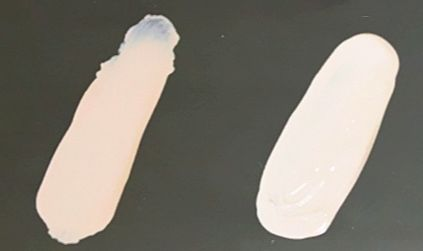
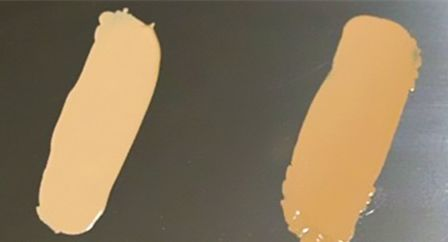
Choosing the right undertone for your foundation is very important! If you have warm-toned skin but choose a cool-toned foundation, your skin will look particularly dull and ashy, and any imperfections will be more noticeable. Therefore, cool-toned skin can choose cool-toned foundation (with pink undertones), and warm-toned skin can choose warm-toned foundation (with yellow undertones).
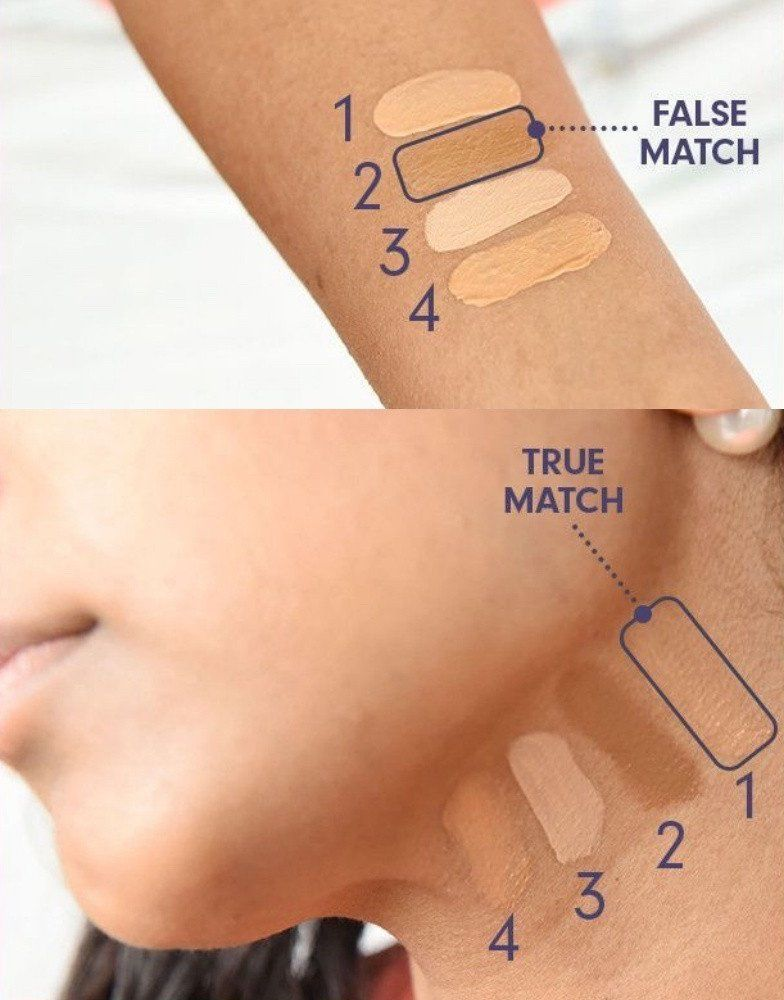
When choosing foundation, be sure not to test it on your hand or just apply it to your cheeks. This is because the skin tone on your hand is not the same as the skin tone on your face. As for your cheeks, you can't guarantee that the skin tone on your cheeks matches your neck. The reason you see others with foundation applied so naturally, with no color difference, is for this very reason. Think about it, if your face is lighter than your neck after applying foundation, doesn't it look like you're wearing a mask? Or if your face is darker than your neck, doesn't it look like your neck and head are separated?
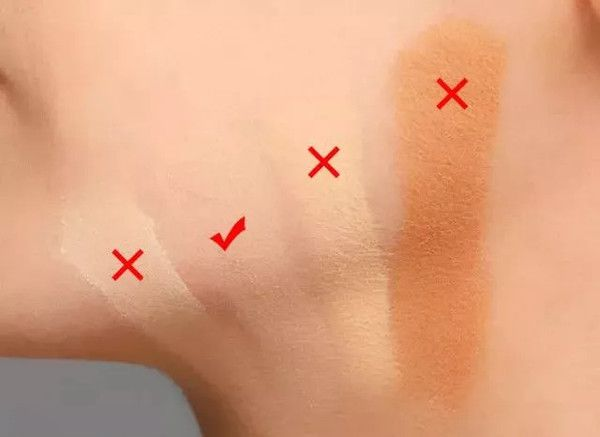
So the correct way to choose foundation is to apply a few shades you're considering to the junction of your jawline and neck. After applying the shades you're considering, observe which shade blends best with both your face and neck. This way, you can select a suitable foundation shade.
Of course, after trying out the foundation colors, you can also leave the foundation on your skin for about 30 minutes. This is because the initial color you see when you first apply it is the foundation's original color. However, after being exposed to your skin's natural oils and your skin condition, you'll be able to see the effect of the foundation after it has oxidized slightly more clearly. Avoid trying out colors under yellow light; it's best to test them in natural light.
Have you learned these simple 3 steps?
There are no people in the world who score exactly 1001 or 3T,
You don't need to mold yourself into what others want you to be just to please them.
An unintentional label can be hurtful to some girls.
Whether your skin is fair or tanned, both have their own beauty and advantages.
You are you, and no one can replace you.